Ram Vansh
Spiritual D2C Ecommerce Experience
Industry
Ecommerce / D2C / Spiritual
Role
UI/UX Designer
Duration
3 Weeks
Year
2026

Overview
Ram Vansh is a premium spiritual D2C ecommerce brand offering curated spiritual products, idols, and sacred home decor. The goal of the project was to design a brand-first Shopify storefront that translates spiritual heritage and cultural storytelling into a modern, conversion-driven digital shopping experience.
The design challenge centered on balancing rich, narrative-driven brand content with dense product catalog navigation. Because spiritual products rely heavily on trust, symbolism, and authentic origin stories, the storefront needed to act as both a storytelling medium and a highly efficient transaction engine.
The resulting storefront features optimized category discovery, high-impact brand layouts, and content-rich product pages. By structuring catalog navigation around specific rituals and cultural themes while embedding trust signals and clear product metadata, the design ensures a frictionless path to purchase without sacrificing the brand’s sacred narrative.
My Role
What I Worked On
- •Designed the storefront homepage for category discovery, storytelling, and merchandising.
- •Structured collection browsing and listing experiences for easier product exploration.
- •Designed the product detail page with clearer hierarchy, trust signals, and conversion-focused layout.
- •Built a cohesive visual system aligned with Ram Vansh’s premium spiritual brand direction.
The Challenge
Designing a premium spiritual ecommerce experience requires a careful balance between rich storytelling and dense catalog browsing. Traditional ecommerce templates often fail to capture the reverence and authentic cultural narrative required for spiritual products, while story-heavy layouts can increase checkout friction and obscure product discovery. The challenge was to design a clean, structured, and conversion-focused storefront where storytelling builds trust, metadata drives product evaluation, and catalog browsing remains highly discoverable.
Storefront Showcase & Core Interfaces
The design system for Ram Vansh relies on a sophisticated visual language, combining rich serif typography, warm gold accents, and clean structured grids. The storefront interfaces are optimized for clear product categorization, storytelling continuity, and frictionless conversion across the shopping funnel.
Homepage Experience
The homepage is structured as the primary discovery and storytelling engine. It blends high-impact brand narratives, prominent hero merchandising, and clear category gateways. By introducing key trust signals, sacred brand origins, and structured collections right at the entry point, the design engages users while providing rapid paths into the product catalog.

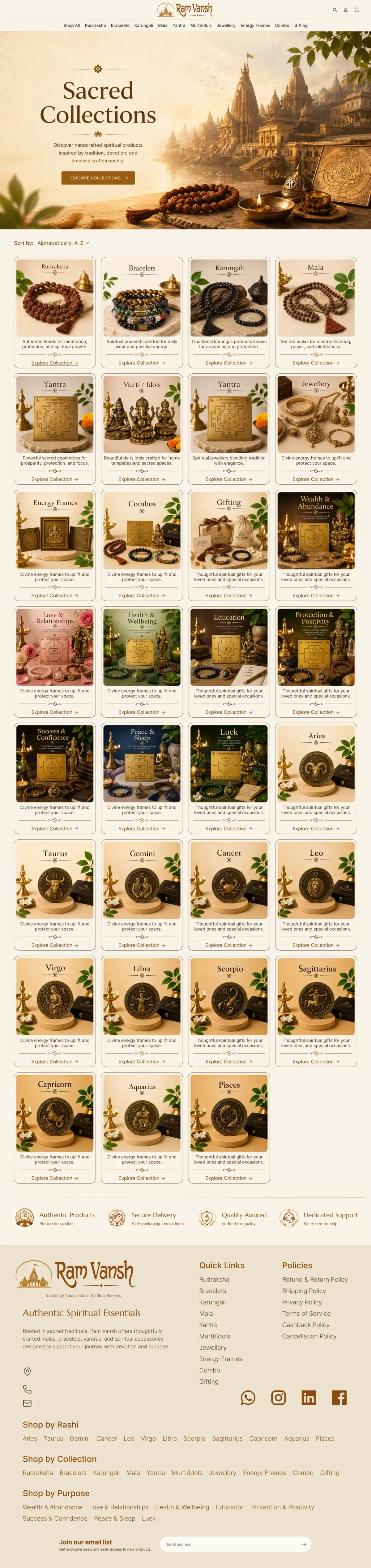
Browse & Collection Discovery
The collection browse interface is optimized for rapid product discovery and filtering. It features a clean, highly structured listing grid that displays high-fidelity product imagery, distinct pricing structures, and quick-add actions. Filters are designed to help users sort by collection theme, material, and ritual requirements, ensuring scalable category exploration without visual clutter.
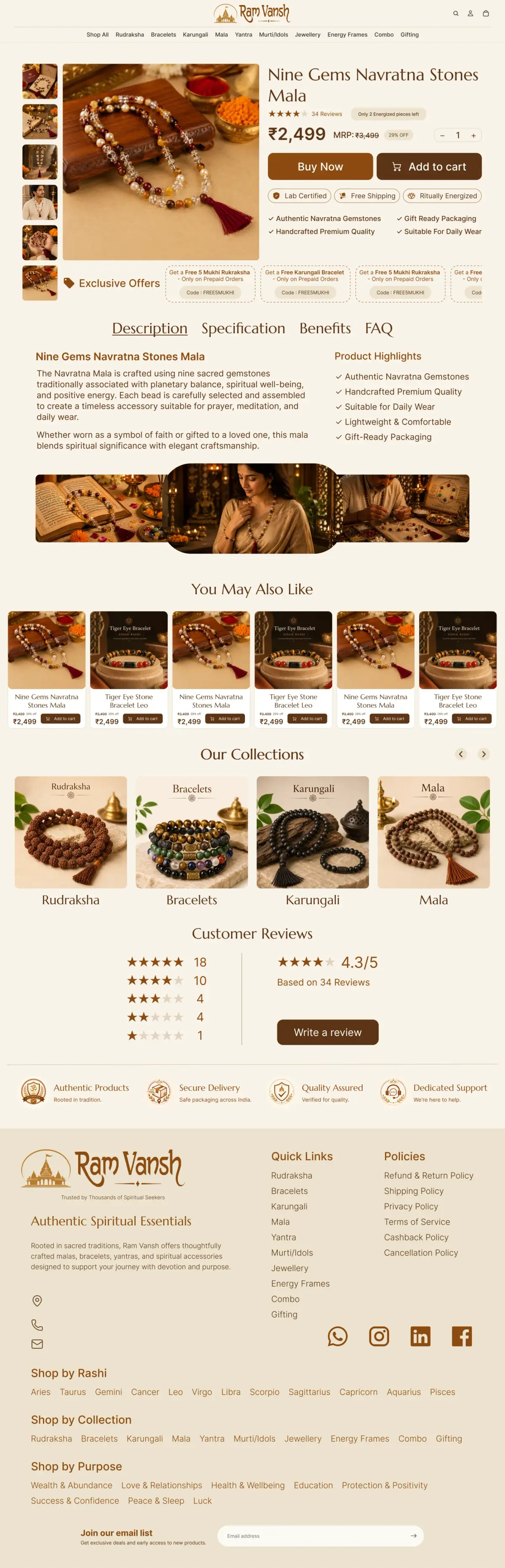
Product Evaluation & Conversion
The product detail page prioritizes info-hierarchy, conversion clarity, and brand authenticity. The layout keeps primary pricing, variant selectors, and the main call-to-action above the fold. Below the fold, it houses modular product details, material specifications, trust markers, interactive FAQs, and related products, reducing buying friction and answering core customer questions directly on the page.
Outcome & Learnings
The finalized storefront designs establish a premium, brand-led digital commerce workspace for Ram Vansh. By combining authentic spiritual storytelling with clean, conversion-focused interface patterns, the storefront builds immediate customer trust while smoothing the path to checkout. The designs create a robust framework for catalog growth and brand merchandising, showing that commercial efficiency and cultural heritage can thrive together in a unified storefront experience.
Key Learnings
- ✓Spiritual ecommerce relies heavily on trust; authentic brand origin stories and transparent product details are as critical to conversion as checkout speed.
- ✓Content-heavy D2C storefronts require clear structural separation; storytelling and catalog merchandising must complement each other without competing for screen focus.
- ✓Grid layouts and category filters work best when they align with user shopping habits (e.g. searching by ritual, occasion, or material).
- ✓Optimizing the product page hierarchy above the fold keeps conversion paths visible while modular tabs below accommodate detailed specifications and trust symbols.