Vibe
Social Music Discovery Platform
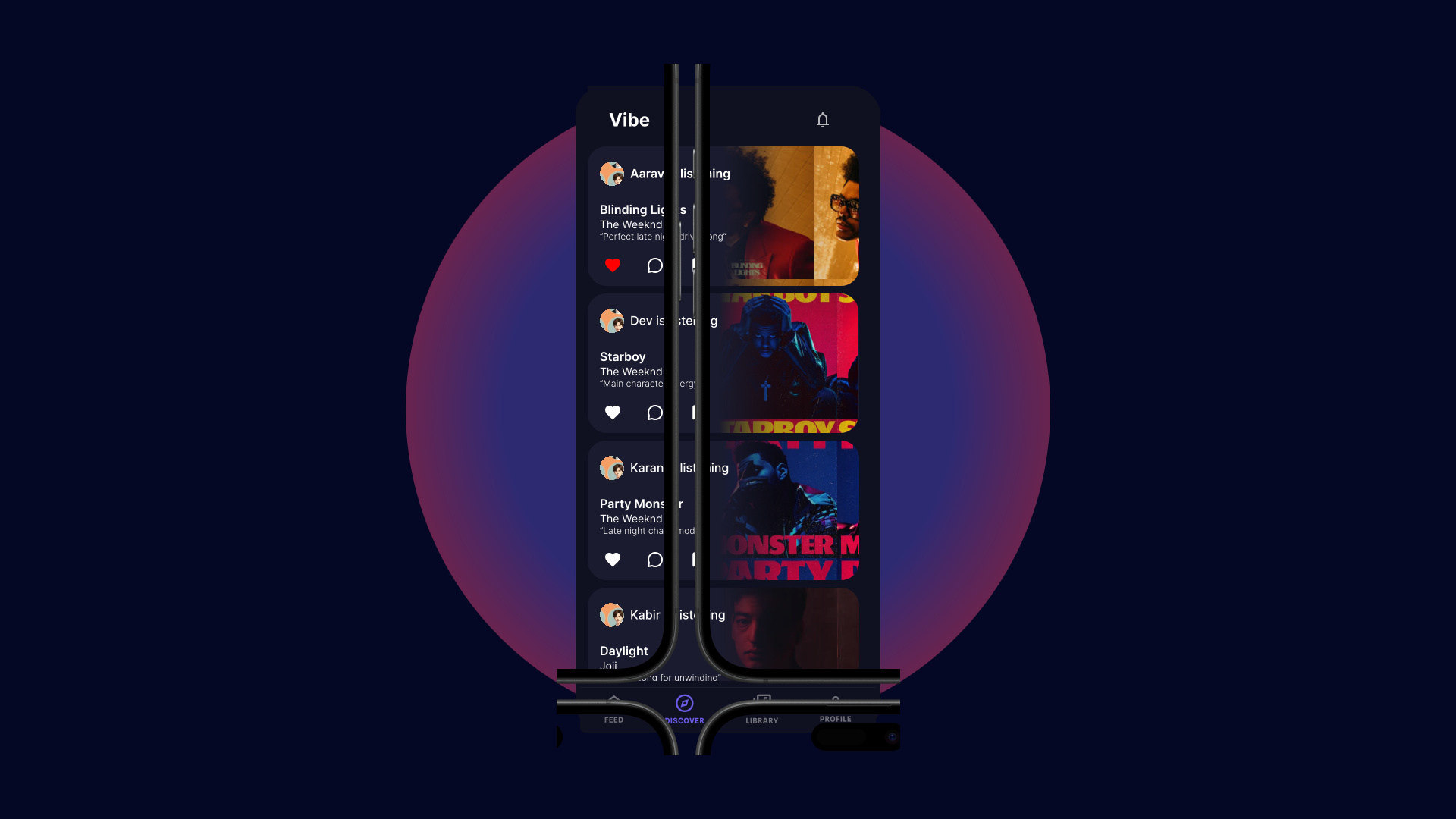
Music discovery today is largely driven by algorithms, making recommendations feel repetitive and disconnected from the people users trust most. Vibe reimagines music discovery as a social experience, combining real-time listening activity, contextual song sharing, and mood-based exploration to help users discover music through friends rather than feeds.
Industry
Music & Social Platform
Role
UI/UX Designer
Duration
2 Weeks
Year
2026
Overview
Vibe explores a more human approach to music discovery by helping users discover songs through trusted friends rather than recommendation algorithms. The platform combines real-time listening activity, contextual sharing, and lightweight social interactions to create a more meaningful discovery experience.
My Role
What I Worked On
- •Researched social music discovery patterns and competitive products
- •Created user personas, information architecture, and user flows
- •Designed wireframes, high-fidelity interfaces, and design system foundations
The Problem
Most music platforms prioritize algorithmic recommendations over human connection. Users frequently share songs through messaging apps and social media, but those recommendations often lack context, disappear in conversations, and fail to create meaningful discovery experiences.
Research Insights & Opportunity Areas
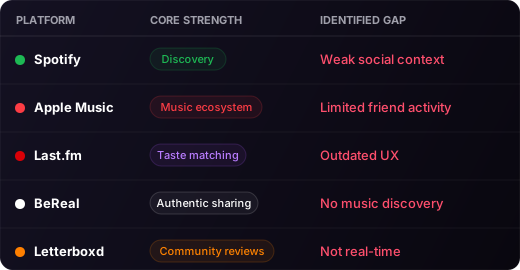
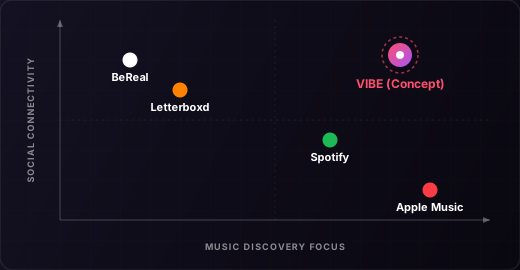
I analyzed platforms such as Spotify, Apple Music, Last.fm, BeReal, and Letterboxd to understand how people discover and share content socially. While each platform solved part of the problem, recurring gaps emerged around contextual recommendations, friend-driven discovery, and lightweight social interaction.
💡Users trust recommendations from friends more than algorithms.
💡Song recommendations often lose context when shared through chats.
💡Existing music platforms provide limited social interaction around listening.
💡Users want lightweight engagement rather than performative social posting.
💡Discovery feels more meaningful when recommendations include personal context.
User Personas
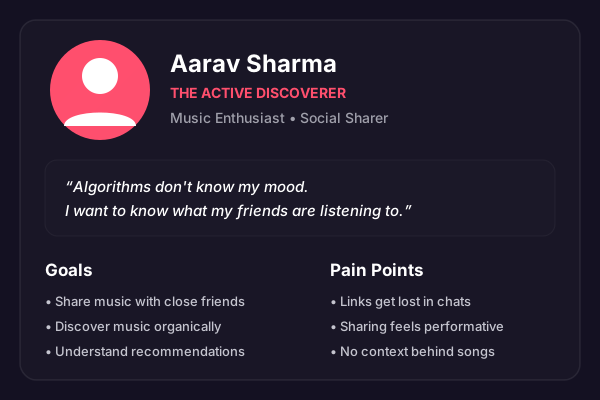
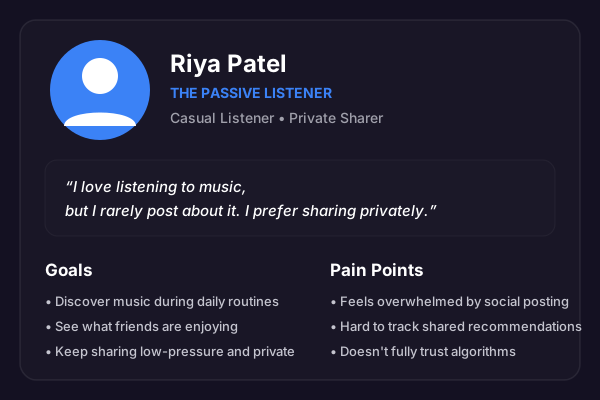
Based on research findings, two personas were created to represent different music discovery behaviors, sharing preferences, and engagement patterns. These personas helped guide product decisions around social discovery, contextual sharing, and low-pressure interaction.
Aarav Sharma
A socially active music listener who discovers new songs through friends and values context behind recommendations.
Riya Patel
A passive listener who prefers private, low-pressure music discovery and minimal social interaction.
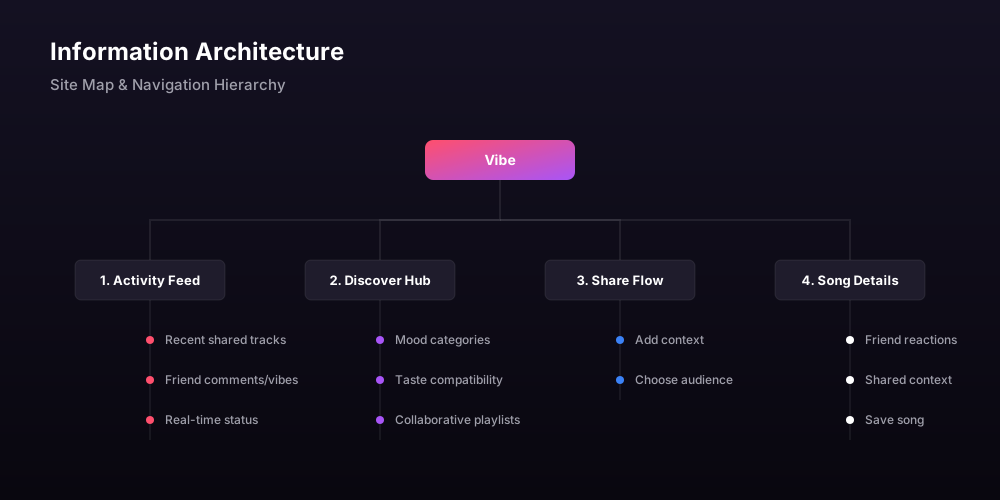
Information Architecture
The product structure was organized around four core experiences that support music discovery, sharing, and engagement.
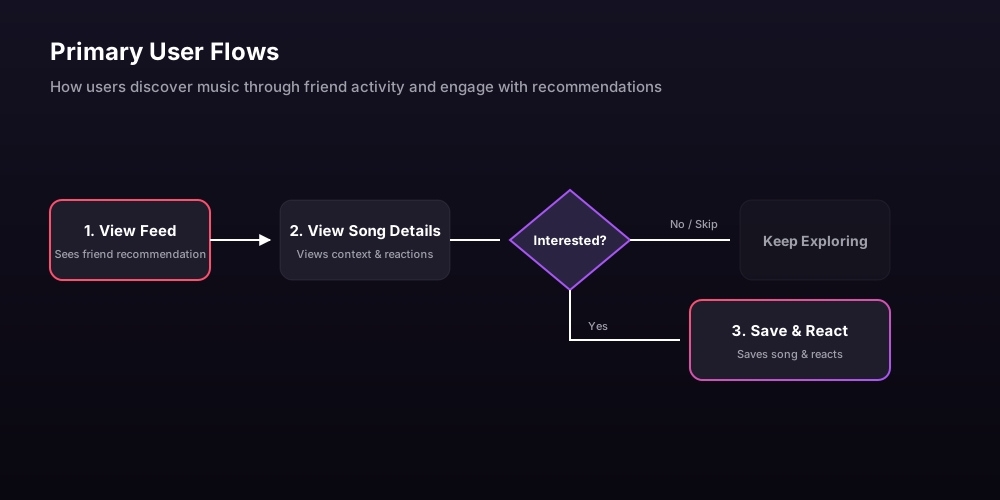
Primary User Flows
User flows were mapped to validate how users discover music, share songs, and engage with recommendations.
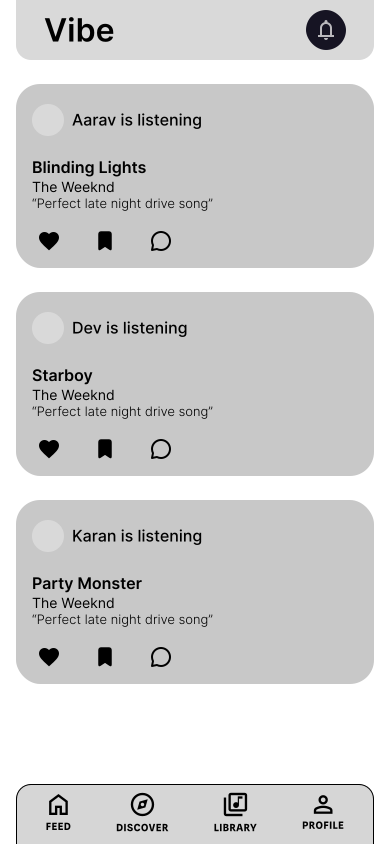
Wireframes
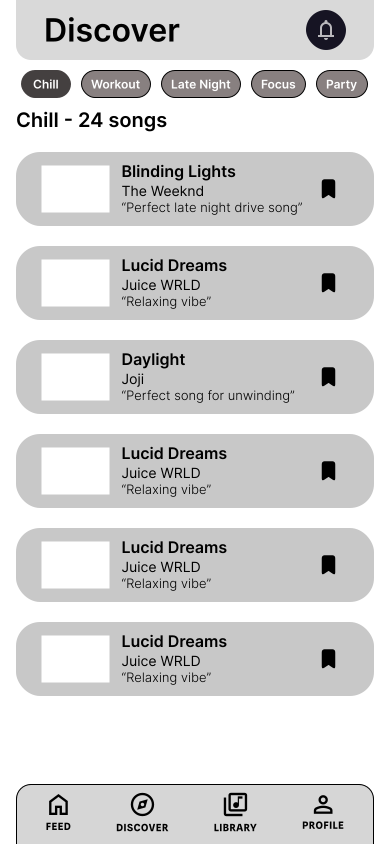
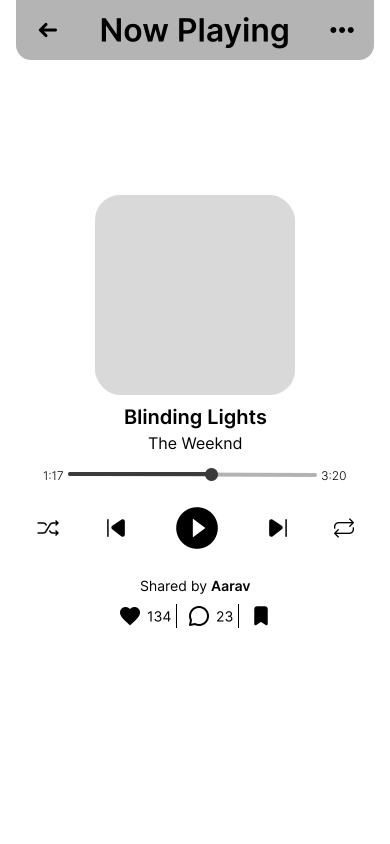
Low-fidelity wireframes were created to validate navigation patterns, content hierarchy, and key user flows before investing in visual design and interactions.
Home - Friend Feed
Discover - Mood Discovery
Now Playing
Share Song

Design System
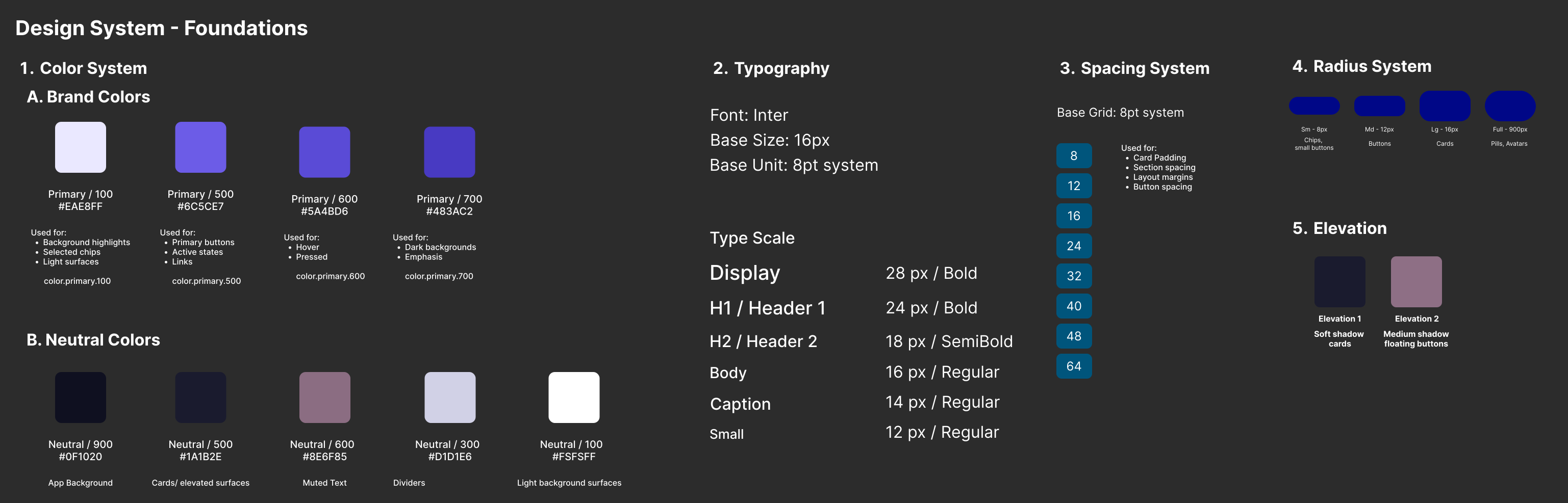
A lightweight design system was created to maintain consistency across the experience. The system combines a dark visual language, mood-inspired accents, reusable components, and an 8-point spacing framework.
Final Interface Designs
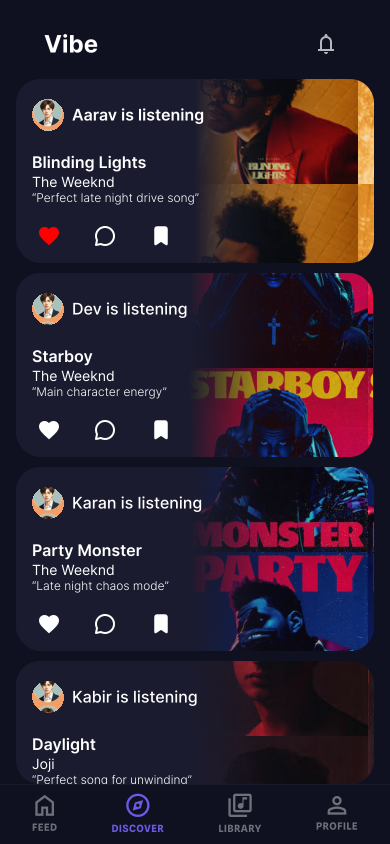
The final interface builds on the validated wireframes while introducing a polished visual system focused on emotion, music, and social engagement.
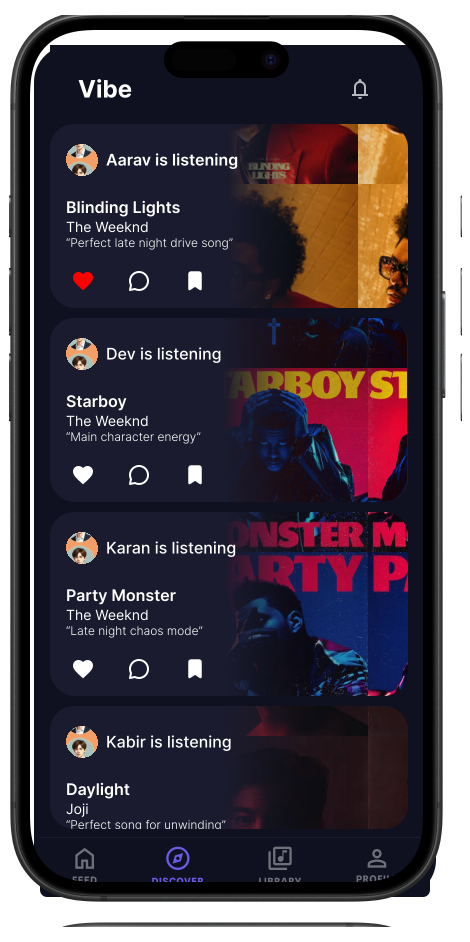
Friend Activity Feed
Discover new music through the people you already know, with context that explains why a song was shared.
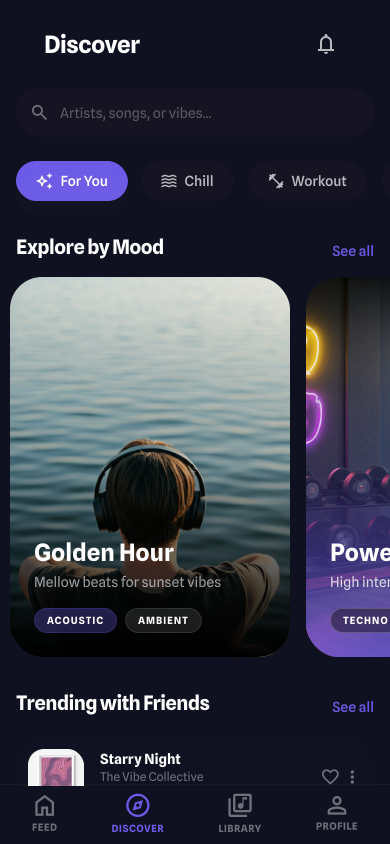
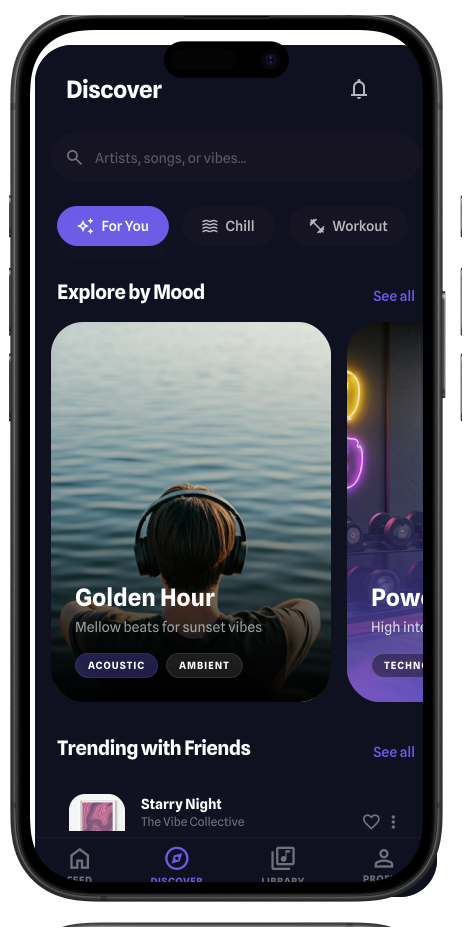
Mood-Based Discovery
Explore playlists and recommendations based on moods, activities, and how you're feeling in the moment.
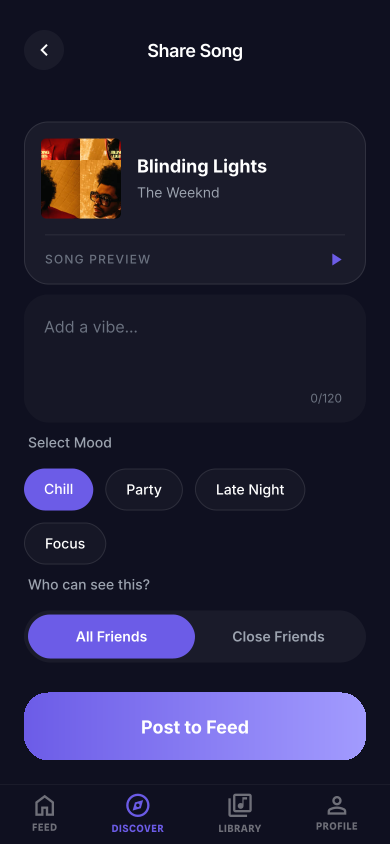
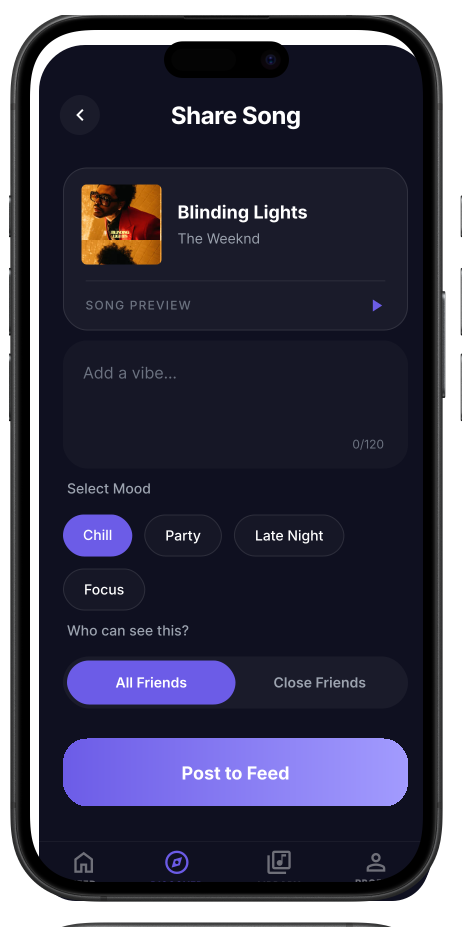
Contextual Song Sharing
Every shared song carries context, making recommendations feel more personal and meaningful.
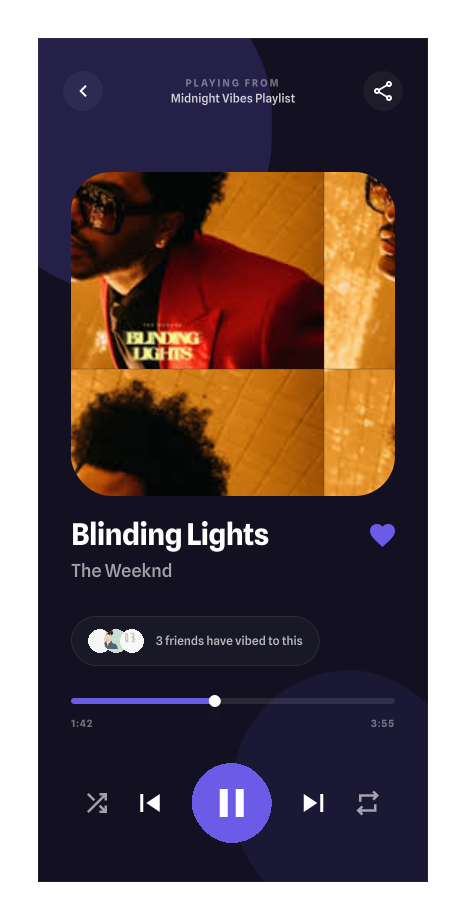
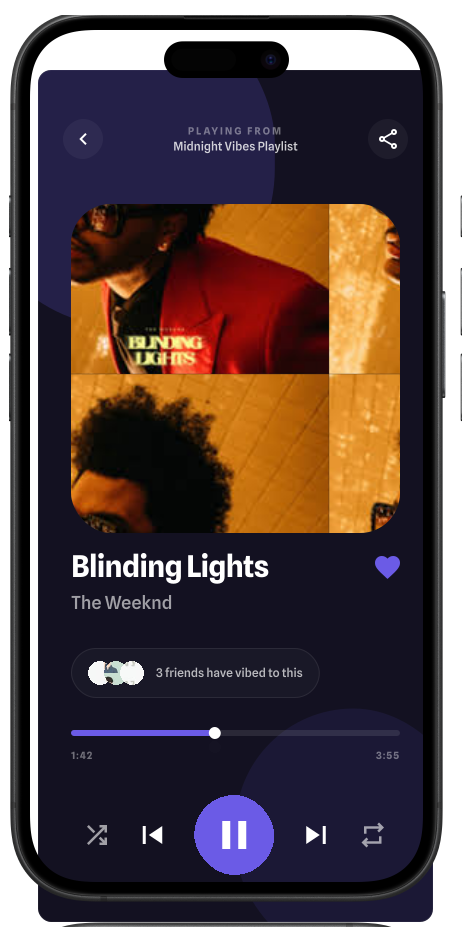
Social Playback Experience
Listen together, react in real time, and see how friends connect with the same music.
Outcome & Learnings
Vibe started as an exploration of how people discover music through friends and evolved into a complete mobile product concept. Through research, wireframing, and visual design, the project explored how context, mood, and social interactions can make music discovery feel more personal than algorithm-driven recommendations.
Key Learnings
- ✓Music recommendations feel more trustworthy when they come from people rather than platforms.
- ✓The story behind a song can be just as important as the song itself.
- ✓Not every social product needs public likes, follower counts, or constant posting.
- ✓Wireframing early helped uncover navigation and discovery issues before moving into UI design.
- ✓Good product experiences often come from understanding behavior first and designing screens second.